
Braces & clear aligners
A well-aligned smile begins with understanding your teeth, your bite and the changes you would like to make.
Orthodontics with Dr. Cynthia Al Bitar.
Request a visit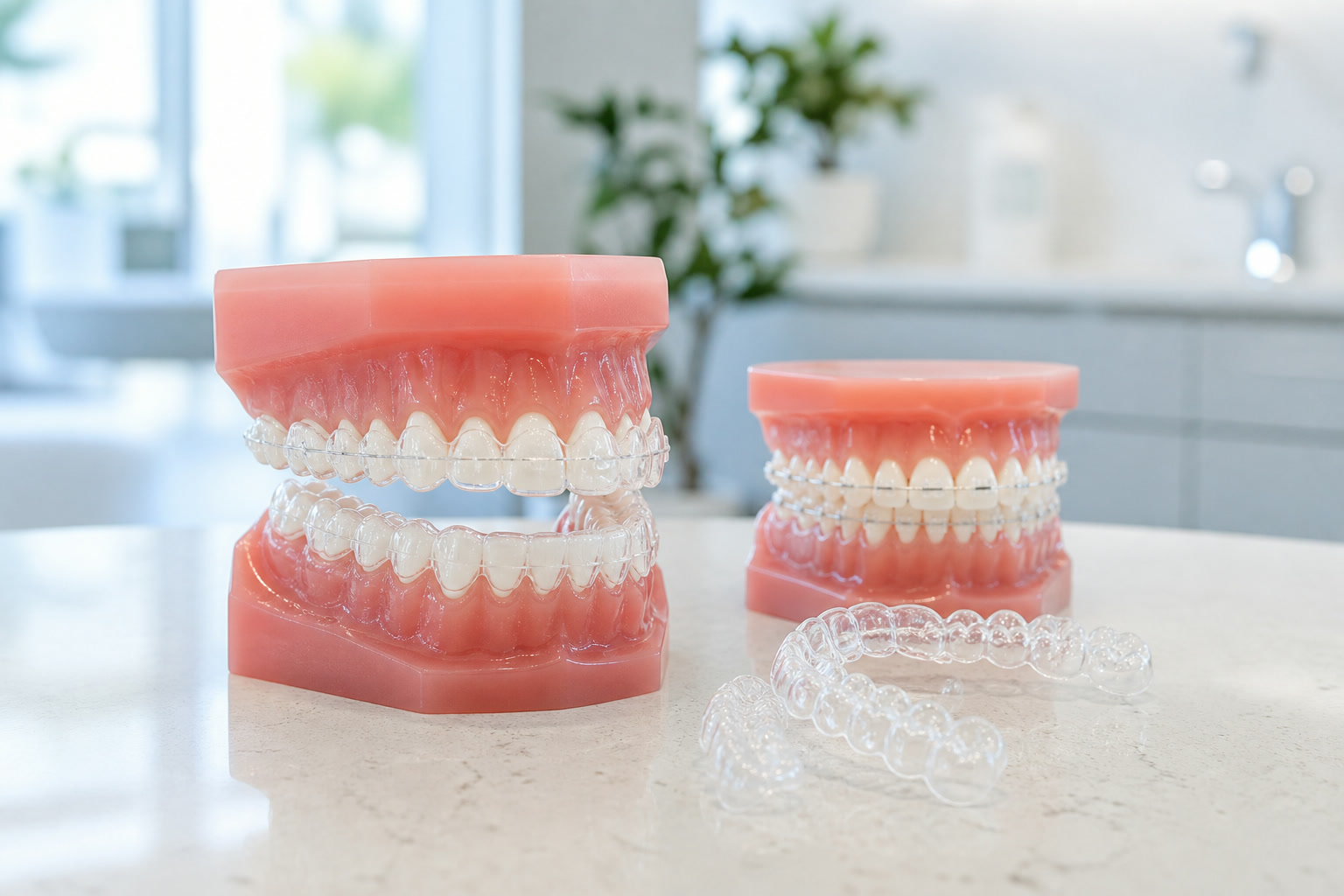
Illustrative treatment image.
Orthodontics guides teeth into better alignment and addresses the way upper and lower teeth meet. Braces and clear aligners apply controlled forces to move teeth over time.
Dr. Cynthia Al Bitar provides orthodontic care at Experteeth. The choice of appliance depends on your teeth, the movements required and your daily routine. Treatment length varies; regular reviews help monitor progress.
What this covers
- Fixed braces
- Clear aligners
- Crowding and spacing concerns
- Bite assessment and alignment planning
What to expect
Understanding your bite
An examination and appropriate records help assess tooth positions and how your teeth meet.
Choosing an approach
Discuss suitable appliances, the likely course of treatment and your role in caring for them.
Keeping the result
Retainers are generally needed after active treatment to help maintain tooth positions.
Common questions
Can adults have orthodontic treatment?
Yes. Orthodontic care is not limited to children and teenagers. The health of the teeth and supporting tissues matters when considering treatment.
Are clear aligners suitable for everyone?
No single appliance suits every case. An orthodontist assesses which movements are needed and whether aligners or braces are more appropriate.
General information to help you prepare for a conversation with your dentist. Treatment recommendations depend on an individual assessment.
About orthodontics — American Dental AssociationHave a question about your care? Start with a conversation.
Request a visit